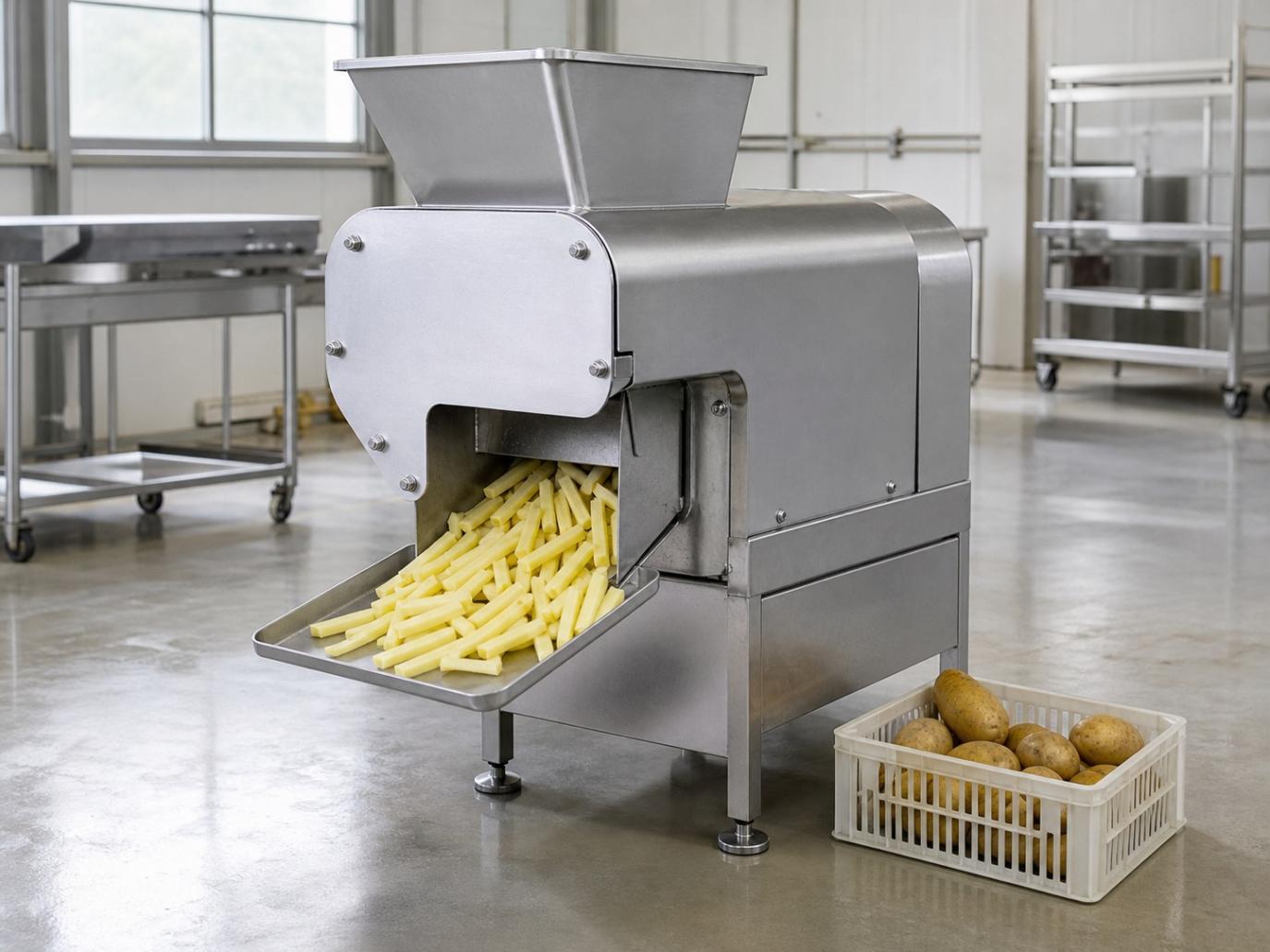
French Fries Cutting Machine
AGICO's compact french fries cutting machine is designed for restaurants, central kitchens, frozen-fries workshops and snack plants that need a clean cut, repeatable sizing and practical daily operation. With a reference output of 300-600 kg/h, it gives growing processors room to increase volume while keeping the footprint and connected load modest.
Send Inquiry Now!
French Fries Cutting Machine for Fast, Uniform Potato Strips
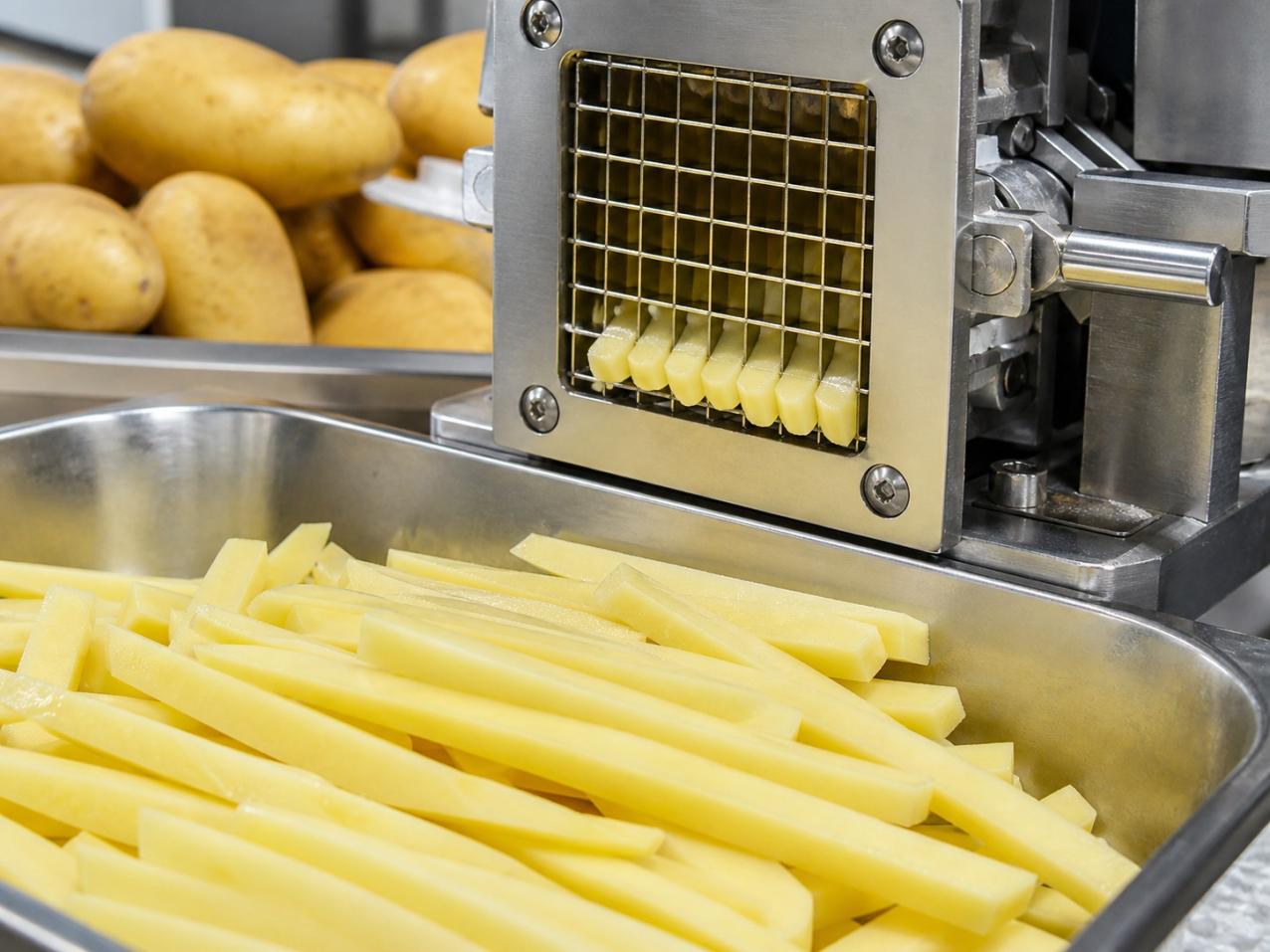
Good fries begin before blanching or frying. When strips vary too much in thickness, thin pieces can overcook while heavy pieces remain soft in the center. Irregular cuts also complicate portion control, seasoning coverage and package presentation. This machine uses a directed feed and replaceable cutting assembly to produce straight strips with smooth surfaces, helping operators build a more stable downstream process.
The machine is suitable for potatoes, sweet potatoes, radishes and comparable firm root vegetables. It can be configured for strip cutting or slicing. For a French fries project, AGICO matches the blade grid to the required finished size, raw-material range and downstream blanching, frying or freezing process. The result is not simply faster cutting; it is a more controllable product specification from batch to batch.
Why Buyers Choose This Compact Cutter
01
Uniform strips that support consistent cooking: A dedicated blade grid forms straight pieces with cleaner edges, reducing the mix of thin fragments and oversized strips that can undermine frying consistency.
02
Useful capacity without a large footprint: The reference configuration processes approximately 300-600 kg/h in a 600 x 500 x 900 mm body, making it suitable for compact workshops and semi-automatic lines.
03
Low connected power: A reference motor power of 0.75 kW keeps the cutter easy to integrate into facilities where energy capacity and operating cost matter.
04
Food-processing construction: Stainless-steel contact areas support hygienic handling, corrosion resistance and routine washdown practices appropriate to the selected configuration.
05
Changeable cutting specification: Different blade assemblies can be selected to suit the target strip or slice dimensions; the exact options should be confirmed with the sample product and final recipe.
06
Ready for a complete process: The cutter can operate as a stand-alone machine or between washing/peeling and washing/blanching equipment in a coordinated potato-processing line.
How the French Fries Cutter Works
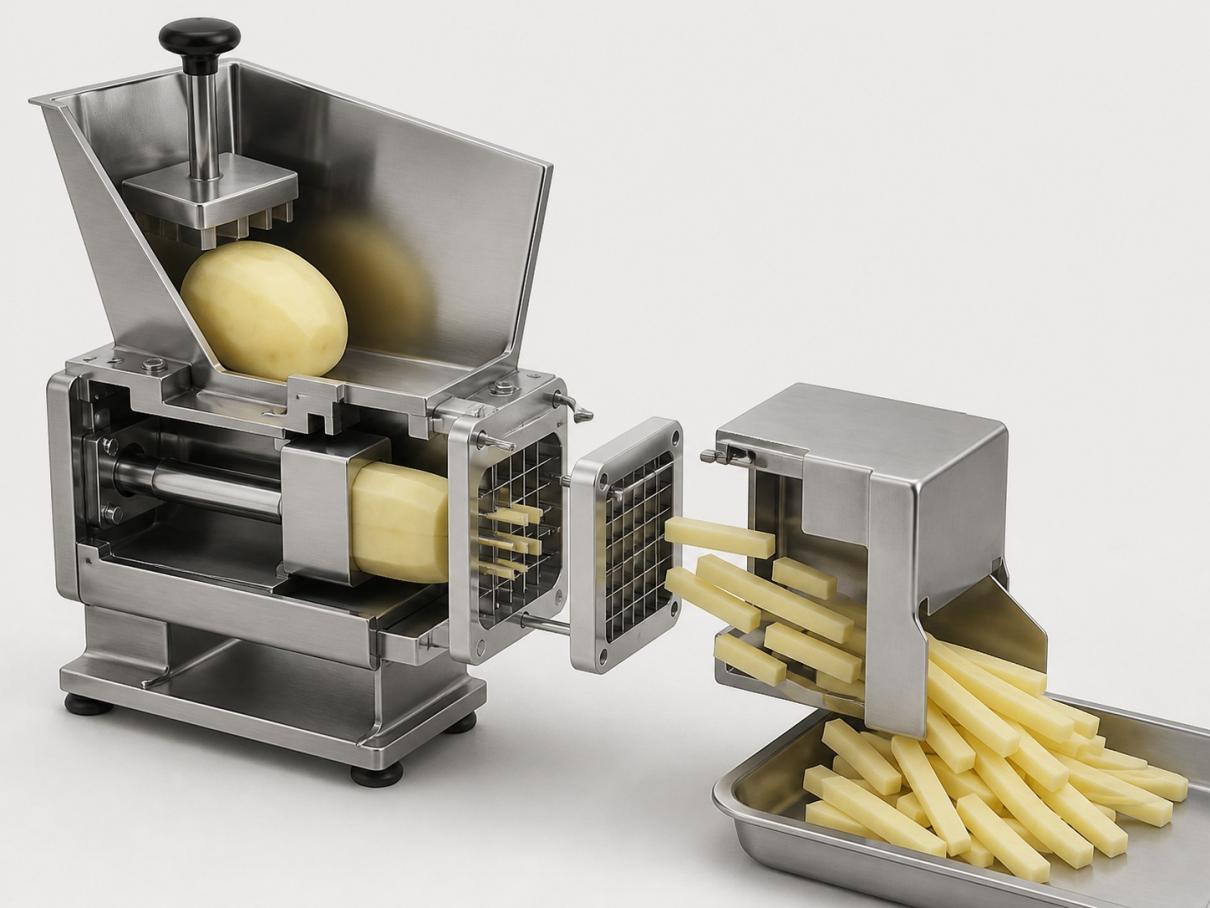
Peeled and inspected potatoes enter the feed section. A controlled pushing action directs each potato through the cutting grid. The grid divides the product in one pass and the finished strips leave through the discharge opening for immediate collection or transfer to the next machine. A properly matched feed path and sharp blade set help limit crushing, ragged edges and unnecessary starch release.
For stable performance, potatoes should be washed, peeled, trimmed and graded before cutting. Extremely irregular, frozen, soft or damaged raw material can reduce cut quality. Operators should stop and isolate the machine before opening guards, clearing a blockage or handling the knife assembly. The operating manual and the safety devices supplied with the confirmed model take precedence over general website guidance.
Reference Technical Parameters
| Configuration |
Capacity |
Power |
Dimensions |
Cutting Output |
Suitable Materials |
| Reference potato cutter |
300-600 kg/h |
0.75 kW |
600 x 500 x 900 mm |
Strips or slices; size by blade set |
Potato, sweet potato, radish |
Parameter note: Confirm voltage, frequency, blade-grid sizes, food-contact material grade, guarding, feed range and guaranteed capacity with AGICO before quotation or publication. Actual output varies with potato size, variety, firmness, preparation and operator feeding.
Consistent Cutting Protects the Rest of Your Process
A cutter has an outsized effect on what comes after it. More consistent cross-sections make it easier to control blanching time, surface moisture removal, frying color and final texture. They can also reduce the number of off-spec pieces that operators remove by hand. For frozen French fries, consistent strips support more predictable cooling and freezing. For fresh or fried products, they improve the visual uniformity customers notice first.
Applications of French Fry Cutting Machine
The same core cutting task appears in several kinds of food businesses, but the right setup depends on the daily volume, finish specification and handling method.
Restaurants, Commissaries and Central Kitchens
Use the cutter to replace repetitive hand cutting and standardize portions across shifts or locations. A compact collection table and simple batch workflow are often sufficient.
Small and Medium French Fries Factories
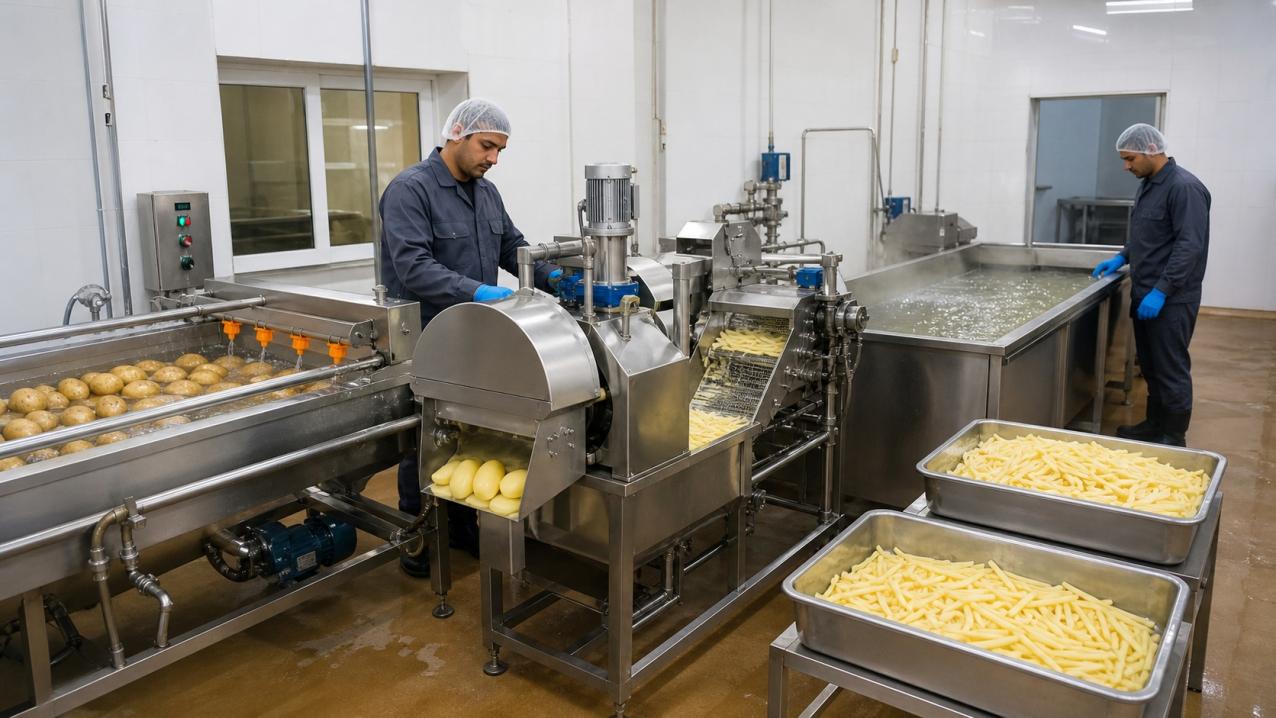
Place the cutter after a potato washing and peeling machine and inspection step. After cutting, the strips can move to rinsing and a controlled food blancher before dewatering, frying, cooling or freezing.
Snack and Potato-Chip Processors
With a suitable slicing assembly, the same equipment family can support potato slices and other root-vegetable products. The selected blade, feed design and throughput must match the target product rather than assuming one knife set suits every snack.
Frozen-Fries Start-Ups
The reference capacity is well suited to processors moving beyond manual preparation but not yet ready for a large automatic line. The cutter can become the core sizing step while conveyors and downstream modules are added as demand grows.
Stand-Alone Cutter or Integrated Line?
Choose a stand-alone machine when potatoes are already peeled, production is batch-based and operators can collect the cut product in food-grade trays. It offers the simplest investment and the most flexible placement. Choose an integrated arrangement when continuous flow, lower handling, repeatable residence time and higher sanitation control are more important.
For fried products, AGICO can connect the cutter with a batch fryer or continuous chips fryer, followed by a deoiling machine and seasoning machine. Buyers planning a coordinated project can also review the existing potato chips production line as a process reference.
What to Confirm Before Ordering
- Finished cut: Send the required strip width and thickness, or a photo and physical sample when possible.
- Raw potato range: Provide typical minimum and maximum dimensions, variety, firmness and whether potatoes will be fully peeled.
- Real hourly demand: State normal and peak input rather than relying only on a headline production target.
- Utilities: Confirm factory voltage, phase and frequency, plus the cleaning-water and drainage arrangement around the machine.
- Upstream and downstream equipment: Share the planned washer, peeler, blancher, fryer or freezer capacities so transfer heights and line balance can be checked.
- Cleaning routine: Discuss tool-free access, removable blade handling, compatible cleaning agents and the sanitation schedule required by your operation.
AGICO Support from Sample to Start-Up
AGICO supplies fruit, beverage and food-processing equipment for customers building stand-alone workstations and complete production lines. For this potato cutter machine, the useful conversation starts with your final fries, not a generic catalogue number. Our team can review the raw material, cut specification, target output, factory power and connected process before preparing a technical proposal.
Support may include equipment selection, blade specification, layout coordination, operating guidance, spare-parts planning and communication during installation and commissioning, subject to the final sales contract. Wear parts and knife sets should be treated as planned operating items. Keeping the correct spare blade assembly on site can reduce downtime and helps protect cut quality over the equipment life cycle.
Hygiene, Safety and Responsible Operation
A compact machine should still be evaluated as part of the factory's food-safety and occupational-safety system. Confirm food-contact materials, guards, electrical components and emergency controls for the destination market. Clean product-contact areas according to the manual, inspect the blade grid for damage, and apply lockout procedures before maintenance. Efficient cutting can reduce avoidable trim and rework, while correct line sizing prevents the energy and capital waste of oversized equipment.
Regulatory and certification requirements vary by country and project. Any CE, electrical, food-contact or other compliance requirement must be agreed in the quotation and verified against the exact supplied configuration; no general website statement should replace project documentation.
Request a Configuration That Matches Your Fries
The fastest route to an accurate proposal is a clear product brief. Tell us what potato you process, the fry dimensions your customer expects and how many kilograms you need per hour. AGICO can then confirm the cutter configuration, blade option, electrical specification and the equipment needed before and after cutting. Contact AGICO for a tailored French fries cutting solution and include a sample photo or drawing with your enquiry.
Get a Free Solution Quote!
Frequently Asked Questions
Q:What capacity can the French fries cutting machine handle?▼
A:The supplied catalogue lists a reference production range of 300-600 kg/h. Real throughput depends on potato size and condition, feeding rhythm, cut dimensions and the capacity of upstream and downstream machines.
Q:Can it cut different French fry sizes?▼
A:The cutting specification is determined by the blade assembly. Tell AGICO the required cross-section and finished product so the available knife grid can be confirmed before quotation.
Q:Can the machine process sweet potatoes?▼
A:Yes. The reference material list includes potatoes, sweet potatoes and radishes. Because hardness, shape and fiber differ, sample testing or detailed raw-material information is recommended.
Q:Does the potato cutter also peel potatoes?▼
A:No. Cutting and peeling are separate operations. For better consistency and hygiene, connect the cutter after washing, peeling and manual inspection.
Q:Is this machine suitable for a small French fries business?▼
A:The compact footprint, 0.75 kW reference power and 300-600 kg/h range make it a practical starting point for many growing processors. AGICO should still compare the machine with your expected shift volume and downstream capacity.
Q:What information is needed for a quotation?▼
A:Send your destination country, voltage, raw potato dimensions, required fry size, target kg/h, operating hours per day and whether you need a stand-alone cutter or a connected line.
Get in Touch Now!