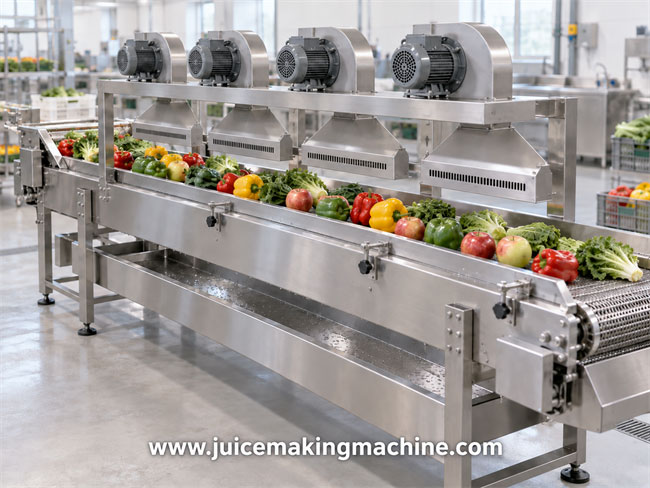
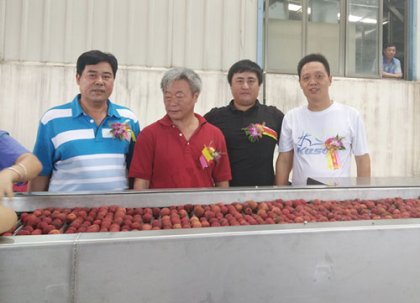
Move washed fruits and vegetables toward packing without leaving pools of surface water behind. AGICO's vegetable air drying machine uses controlled airflow above a food-grade conveyor to blow water from fruit and vegetable surfaces. It is designed for continuous post-wash draining in fresh-cut plants, central kitchens and produce packing facilities. The product remains fresh: this is surface-water removal, not thermal dehydration and not a process for making dried fruit or dried vegetables.
Surface Drying, Not Food Dehydration
The term air drying can describe very different processes. On this page it means using high-volume ambient or low-temperature airflow to remove droplets left after washing. Residence time is short and the objective is a drier surface before inspection, waxing, labeling, freezing or packing. A hot-air food dehydrator works for hours to lower moisture inside the food and create a shelf-stable dried product. These machines have different temperatures, airflow design, residence times and purchasing intent.
Buyers seeking fresh apples, peppers, leafy vegetables or cut produce after washing need a surface air dryer. Buyers making dried apple slices, raisins or vegetable powder need a thermal drying system. AGICO can evaluate either process, but the equipment should never be selected from the word 'drying' alone.
Why Add a Mesh-Belt Air Dryer?
Continuous operation: A conveyor accepts product directly from washing or inspection and moves it toward the next process without repeated basket loading.
Gentle product handling: Airflow removes droplets while the belt supports the product, making the concept suitable for many fruits and fragile vegetables after trials.
Adjustable exposure: Belt speed, blower arrangement and air-knife position can be matched to product size, loading depth and required surface condition.
Cleaner packing: Reducing free water before packing helps avoid dripping trays, wet labels and unnecessary water entering the package.
Flexible conveyor choices: Mesh belt, roller, turning or vibration-assisted conveying can be considered according to the produce and line layout.
No intentional moisture removal from the core: Correct operation preserves fresh texture because the system is not designed as a heated dehydration tunnel.
How the Fruit Air Drying Machine Works
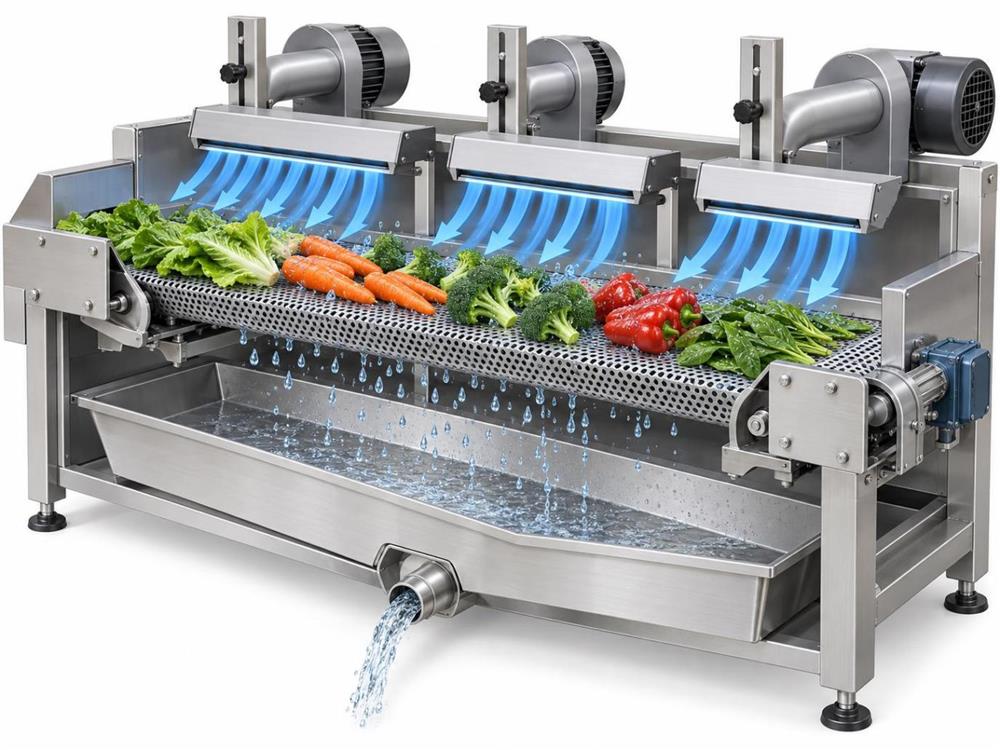
Washed product enters the conveying section in a controlled, shallow layer. Centrifugal or axial-flow blowers supply air to adjustable outlets or air knives above and, where appropriate, below the belt. The moving air breaks the surface-water film and pushes droplets away from crevices. Water passes through the open conveyor or moves to collection areas, while the product continues toward discharge.
Effective drying depends on exposing the wet surfaces. Round fruit can be rotated on rollers, leafy vegetables may need a mesh belt, controlled agitation or multiple airflow angles, cut pieces must be distributed without deep piles. More blower power does not automatically produce a better result. Excessive velocity can move light leaves, bruise delicate produce, increase noise and waste energy. Product trials should establish the useful balance of airflow, belt speed and loading depth.
Reference Configuration
The supplied AGICO fruit and vegetable catalogue lists an air-type mesh-belt dehydrator for removing surface water after cleaning. The following data are preliminary references for the illustrated standard configuration. AGICO will confirm the exact fan quantity, airflow, belt construction, voltage and dimensions after reviewing the product and required result.
Configuration
Dimensions
Power
Conveyor
Air System
Temperature
Primary Duty
Mesh-belt reference
3000 x 1200 x 1300 mm
7 kW
Product-specific mesh belt
Multiple blowers / air knives
Ambient or low temperature
Surface-water removal
Reference data are not a binding specification. Overall length, belt width, blower quantity, installed power and air arrangement may change with throughput, product shape, incoming water load and the available factory space. Confirm all utilities and interfaces in the written quotation.
Product-Based Configuration Options
For apples, citrus, tomatoes and similar round produce, roller conveying can turn the fruit so air reaches more of the surface. A mesh belt supports cut vegetables and mixed products, while a multi-layer or turning belt can increase exposure within a compact footprint. Leafy vegetables may benefit from gentle vibration or carefully directed airflow that opens the layer without ejecting light leaves. A final clean-air section can be considered when the machine is located immediately before packing.
Useful options may include variable-frequency conveyor control, adjustable blower speed, movable air knives, removable belt sections, collection trays, access covers and matching inlet or outlet conveyors. Options should solve a stated process need; unnecessary fans and enclosed tunnels increase cleaning time, noise and power consumption.
What Result Should Buyers Specify?
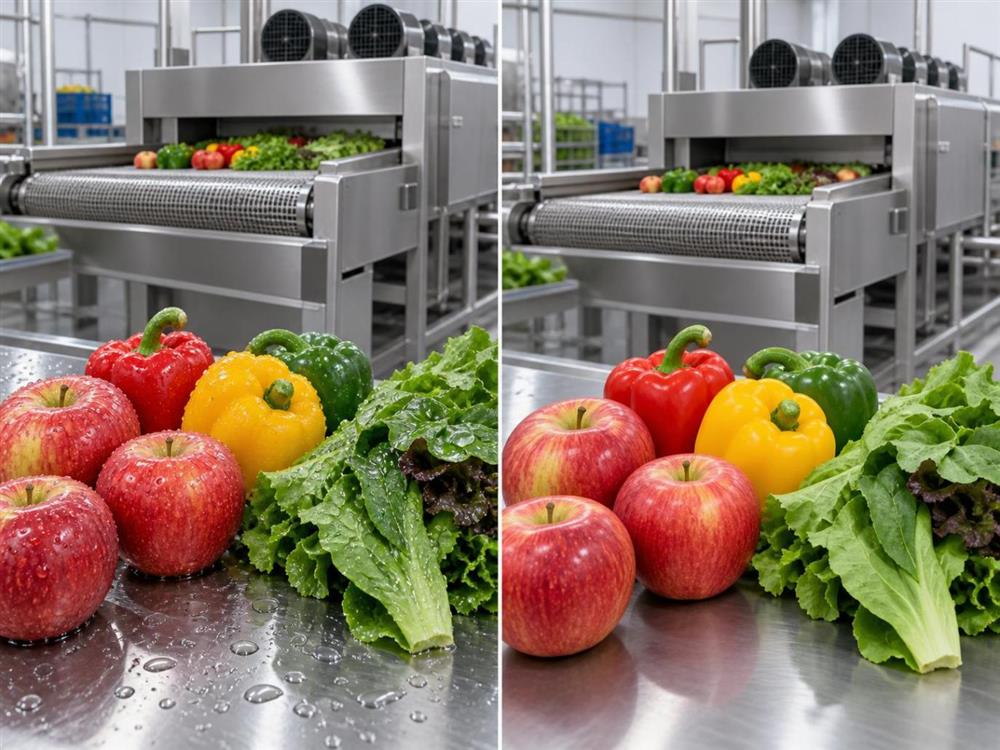
Dry is not a measurable acceptance target. Provide the incoming product, line capacity, typical water carryover and the next operation. During a trial, compare product weight before and after air treatment, visible droplets, water collected under the belt, product temperature, bruising and the condition of labels or packaging. For leafy produce, check whether light pieces move or fold. For fruit, inspect skin marking and missed water around stems or cavities.
Applications of Air Drying Machine
Fresh fruit packing
Apples, citrus, pears, tomatoes and similar products after spray, brush or bubble washing and before grading, waxing, labeling or packing.
Leafy vegetable lines
Lettuce, spinach, cabbage and herbs after washing where continuous gentle surface draining is preferred.
Fresh-cut vegetables
Pepper, carrot, potato and mixed vegetable pieces before inspection, freezing, cooking or packaging.
Central kitchens
Prepared produce for catering, restaurants and meal factories that need less dripping during portioning and packing.
Pre-freezing handling
Surface-water reduction before freezing, with the final residence time and temperature designed as part of the complete freezing process.
Air Drying vs. Centrifugal Dewatering
A centrifugal batch machine can remove water thoroughly from a defined basket load, but it requires loading, spinning and unloading cycles. A mesh-belt air dryer supports continuous flow and avoids high-speed basket rotation, which can be preferable for delicate or larger produce. It usually needs more floor length and several blowers. Some lines combine vibration draining followed by air knives, others use centrifugal dewatering for cut vegetables and air drying for whole fruit. The correct choice comes from product behavior and line balance, not a universal ranking.
If a batch process is more suitable, compare the dedicated fruit and vegetable dewatering machine. It removes surface water by centrifugal force and should also remain distinct from fried-food deoiling equipment.
Integration in a Washing and Packing Line
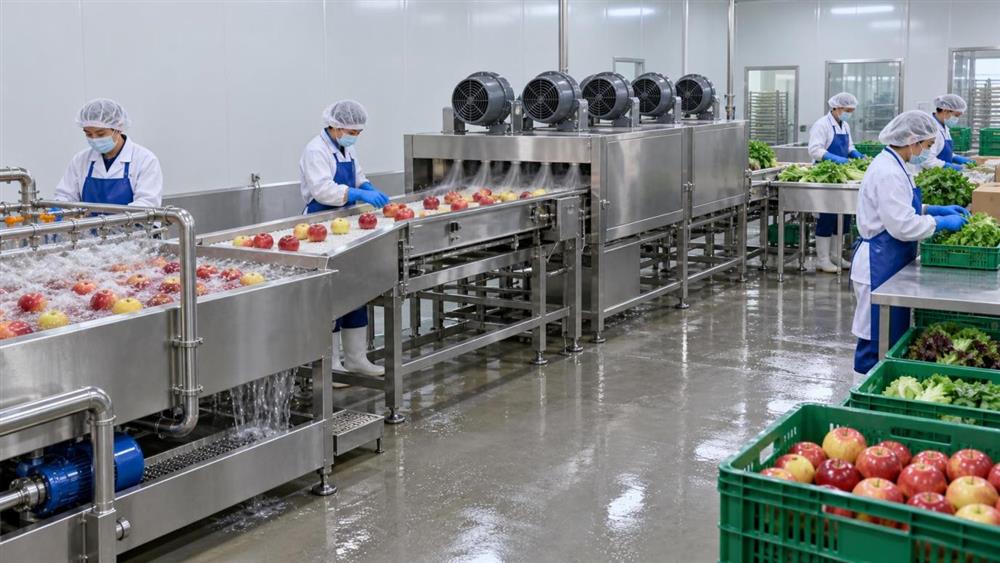
A typical flow is sorting, fruit and vegetable washing, inspection, cutting where required, final rinse, preliminary draining, air drying, grading and packing. A commercial vegetable cutting machine should be balanced with the dryer so pieces arrive in a uniform layer rather than irregular surges.
Line engineering should also address drainage, floor slope, clean-air intake, noise, access for belt cleaning and the distance to packaging. Placing the dryer too far from the washer can create manual transfer and contamination risks; placing wet packing operations too close to the air intake can recirculate moisture.
AGICO Engineering and Lifecycle Support
AGICO supplies stand-alone fruit, beverage and food-processing machines as well as coordinated production lines. For an air drying project, our team can review product photos or samples, line capacity, upstream washing, incoming water load, factory utilities and the required condition before packing. This information supports a practical blower, conveyor and layout proposal.
Support may include equipment selection, layout coordination, operating guidance, spare-parts planning and installation communication according to the final contract. Routine care should cover belts, bearings, blower inlets, air knives, drains and electrical controls. Cleaning access and locally available wear parts should be discussed before purchase, not after the line arrives.
Hygiene, Safety and Responsible Operation
Confirm food-contact materials, belt certification, guards, emergency stops and electrical protection for the destination market. Air entering the product zone should come from an appropriate clean location, and the machine must be cleaned under the plant hygiene plan. Isolate fans and conveyors before opening guards. Correct airflow and belt speed can reduce unnecessary power use; oversized fans, blocked inlets and deep product layers waste energy without guaranteeing a better surface result.
CE, food-contact and other regulatory requirements vary by country and configuration. Required components and documentation must be named in the quotation and verified against the exact supplied machine.
Frequently Asked Questions
Q:Does the vegetable air drying machine use heat?
A:The standard purpose is ambient or low-temperature surface-water removal. If temperature control is requested, it must be specified carefully so fresh quality is protected and the system is not confused with a thermal dehydrator.
Q:Can it make dried fruits or dehydrated vegetables?
A:No. A short conveyor air-drying step removes external wash water. Dried products require a thermal or low-temperature dehydration process designed to reduce internal moisture.
Q:Is it suitable for leafy vegetables?
A:Yes, subject to testing. Air velocity, belt type, loading depth and retention devices must prevent light leaves from blowing away or becoming damaged.
Q:What capacity can it handle?
A:Capacity is product-specific and is not stated as a universal figure in the supplied reference. Send the required kg/h, loading depth and product so belt width, length and airflow can be calculated.
Q:How is it different from centrifugal dewatering?
A:Air drying is continuous and uses airflow over a conveyor. Centrifugal dewatering spins a batch in a perforated basket and may remove water more intensively from certain cut vegetables.
Q:What information is needed for a quotation?
A:Provide the product, size, incoming condition, required kg/h, available line width, voltage, next process and photos or video of the washing discharge.
Request a Product-Specific Air Drying Proposal
A useful quotation begins with the water on your actual product, not a generic fan count. Send AGICO your produce, line capacity, upstream washer, desired surface condition and available factory space. Contact AGICO for a tailored fruit and vegetable air drying machine and include the destination voltage and a video of the wet product leaving the washer.