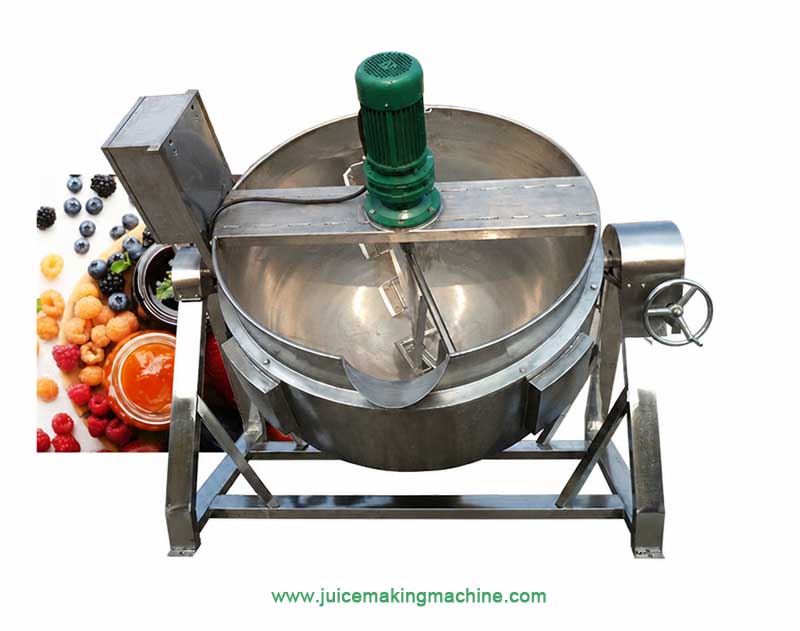
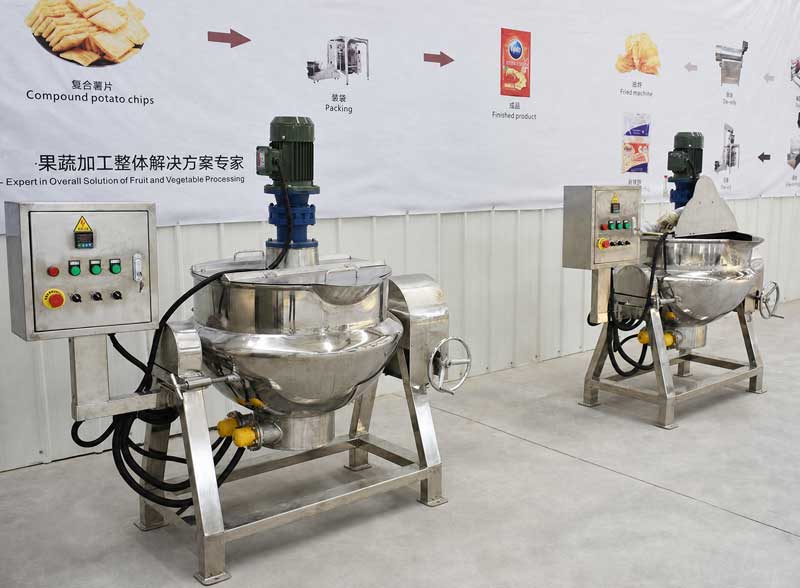
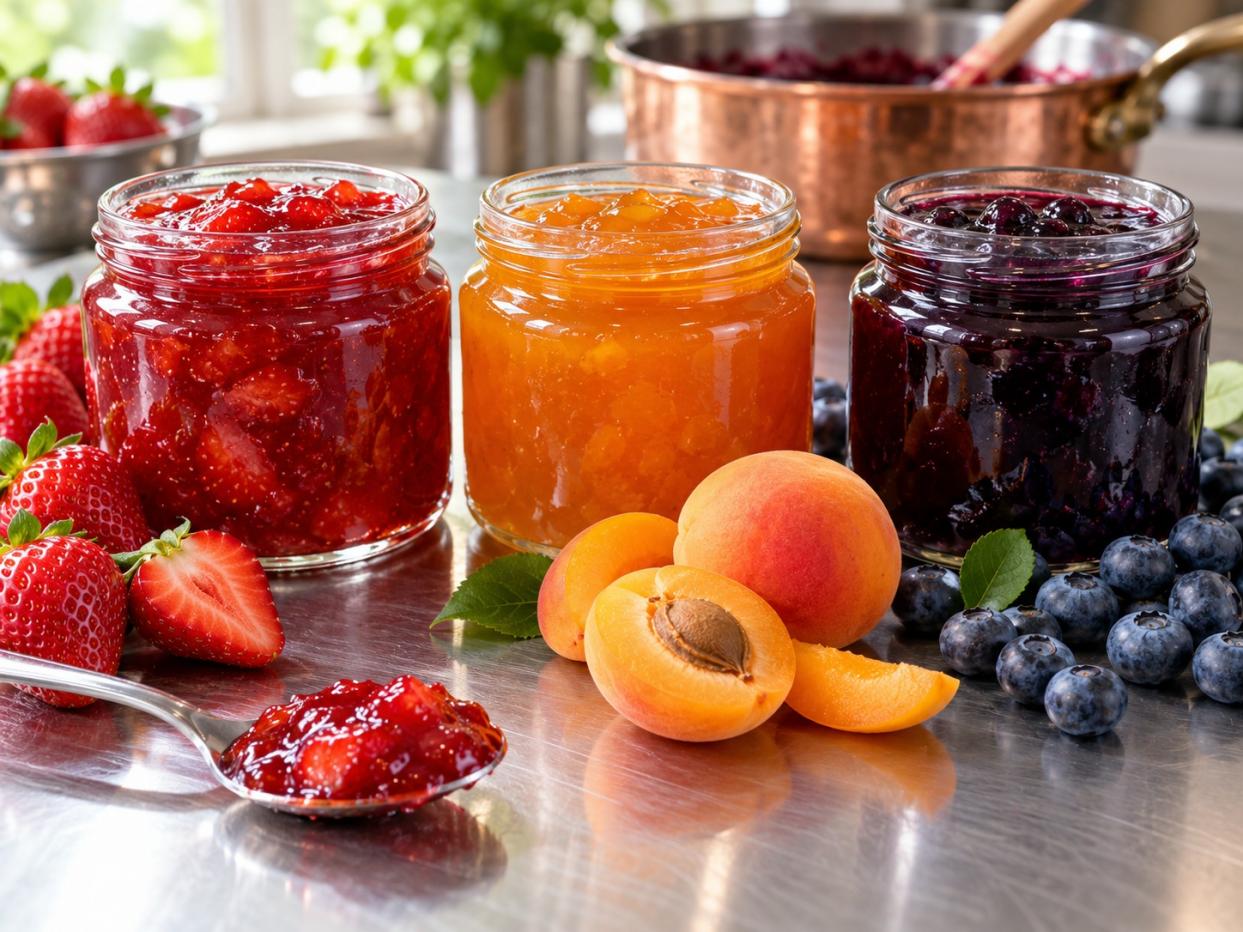
AGICO can configure a small jam making machine around a jacketed cooking vessel, suitable agitation and controlled heating, with preparation and filling equipment selected for your product. It is a practical starting point for preserve makers, farm processors and food businesses expanding beyond hand-stirred pans. Jam making machine or jam cooking machine is the critical equipment in the jam production line.
For producers moving beyond hand-stirred pans, this gives the cooking stage a dedicated piece of equipment while retaining the flexibility of batch production.
Planning a jam production project? Send your fruit type, required batch size and available heating source to request a suitable configuration and quotation.
As jam thickens, manual stirring becomes harder to maintain throughout a batch. The motor-driven agitator keeps the mixture moving and reduces the need for continuous hand stirring.
The operator still manages ingredient addition, heating and the cooking endpoint. Mechanical agitation supports that work and makes larger batches more manageable.
02
Heating and Mixing in One Vessel
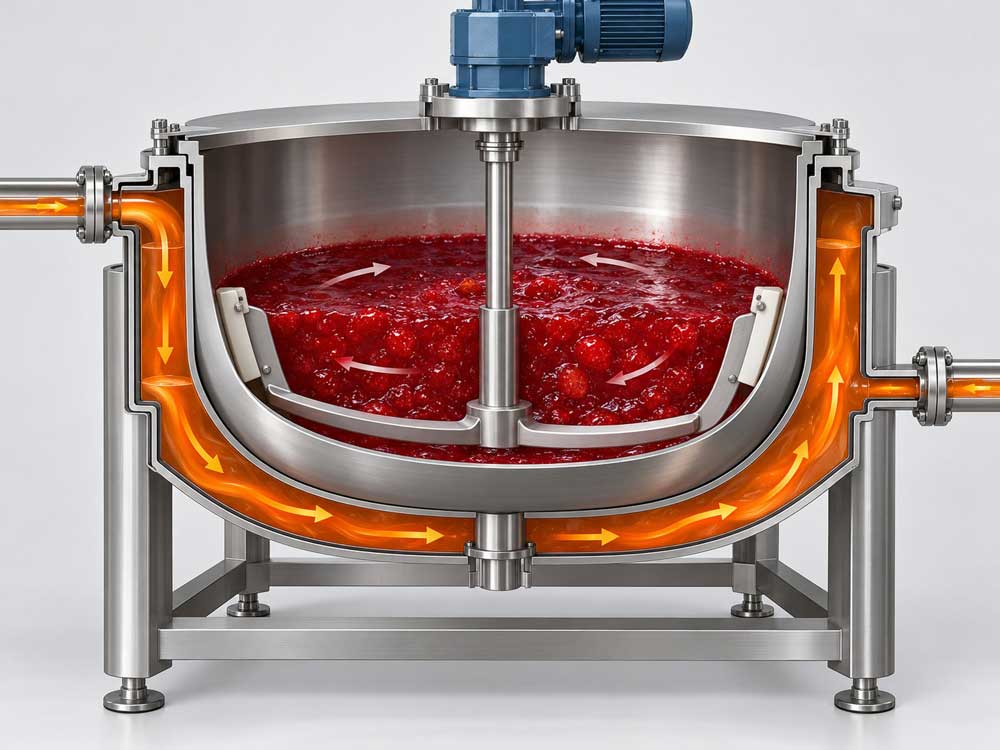
The jacket transfers heat through the kettle wall while the agitator circulates the product. Together, these functions help distribute heat and mix the ingredients during cooking.
For thick jam, the agitator design matters as much as the heating system. If your product tends to stick to the cooking surface, specify whether wall-scraping agitation is required. A standard mixing paddle should not be assumed to provide the same action as a scraper.
03
Tilting Discharge for Batch Transfer
Once cooking is complete and the agitator has stopped, the kettle can be tilted to discharge into a suitable container. This reduces the need to scoop the product out by hand.
The receiving container, discharge height and route to the filling station should be considered when planning the installation, particularly for thick products that do not flow easily.
04
Flexibility for Different Recipes
Batch cooking allows production to be scheduled around individual recipes and orders. A producer can process one fruit formulation, clean the equipment and prepare the next batch.
Suitability depends on the recipe, final viscosity and desired fruit texture. Smooth fruit spreads and preserves containing fruit pieces may need different mixing arrangements.
05
Access for Inspection and Cleaning
The open kettle provides access to the cooking vessel for inspection and manual cleaning once the equipment has been safely stopped and cooled.
When comparing machines, check access around the shaft and agitator as well as the bowl itself. Cleaning between recipes is part of the production cycle and should be included in capacity planning.
Reference Cooking Equipment Parameters
The models below are jacketed mixer references, published for sugar cooking. They provide a preliminary comparison of heating power and installation space. A jam configuration requires confirmation of scraper geometry, usable batch volume, product-contact materials and discharge design; these figures do not establish a guaranteed jam production rate.
Reference model
Mixing power (KW)
Electric heat (KW)
Dimensions (mm)
Weight (kg)
AGCJ100
0.75
18
1500 x 900 x 1500
160
AGCJ200
1.5
24
1600 x 1000 x 1600
200
AGCJ300
1.5
24
1700 x 1150 x 1600
260
Heating and mixing powers are separate loads. Confirm the complete installed load, voltage, phase and frequency in the quotation. Model numbers should not be treated as a declared usable volume. Allow for foam, agitation clearance and the minimum load needed for effective mixing.
What Determines the Jam Making Machine Price?
Price depends on the kettle size, heating arrangement, agitator, product-contact materials, controls and discharge configuration.
When comparing quotations, check what is included. Two kettles with the same nominal volume may have different usable capacities, mixing systems and utility requirements.
For a quotation that matches your project, provide:
The fruit and type of jam you want to produce.
Your required batch size or daily finished output.
Whether the jam is smooth or contains fruit pieces.
The electricity and heating utilities available.
Your destination country and any equipment needed before or after cooking.
AGICO supplies fruit-processing equipment and can review the cooking station alongside the preparation and packaging stages. Send your recipe outline, sample product, available utilities and workshop dimensions. We can discuss the equipment scope, connections and access space before preparing a technical offer.
Request a sample trial that records charging weight, finished yield, batch time and product quality. Include scraper access, seal inspection and spare parts in the review. Installation guidance, operator training and commissioning arrangements should be listed in the offer so you know what support is included.
How the Jam Cooking Machine Works?
Prepared fruit and ingredients enter the vessel according to the agreed recipe. Heat passes from the jacket through the food-contact wall. The agitator circulates the mixture, dissolves ingredients and keeps the batch moving as it becomes thicker. In an atmospheric cooker, evaporation removes water during concentration. The operator checks the recipe endpoint before transferring the jam for the specified filling process.
The temperature displayed at one probe does not describe every part of a thick batch. Probe location, mixing coverage and load level all matter. Likewise, a timer alone cannot compensate for fruit with a different starting solids content. Establish the process using representative fruit and confirm the result with the appropriate measurements and a cooled product sample.
Cleaning and Responsible Operation
Jam residue becomes harder to remove after drying, so plan access to the vessel, scraper, outlet and transfer fittings. Follow the approved cleaning procedure and protect electrical components from unsuitable washdown. Check scraper wear and seals routinely. Isolate the drive and heat supply before maintenance, and use the specified precautions around hot product and any pressurized jacket.
Accurate batch sizing and avoiding unnecessary reheating can reduce energy use and product loss. Verify food-contact materials, heating-system documentation and electrical requirements for the destination market. The cooker alone does not establish a safe shelf life; the recipe, process, container and storage conditions need validation as a complete product system.
Frequently Asked Questions
Q: Can one jam making machine handle several fruits
A: Yes, when its mixing, heating and discharge suit the recipes. Trial the thickest product and the largest fruit pieces, and plan cleaning between formulations.
Q: Does the machine include a fruit pulper
A: The cooking station and fruit preparation are separate modules. Specify whether you supply prepared pulp or need equipment to process whole fruit.
Q: How many kilograms of jam can it make per hour
A: Output depends on usable batch size, evaporation required and the full cycle time. Request a finished-product rate based on your recipe rather than converting vessel liters directly into kilograms per hour.
Q: Is scraper mixing suitable for chunky jam
A: It can be, if the agitator geometry and speed are chosen for the pieces. Check a sample batch and include the pump and filler in the same product-handling test.
Q: Do I need a vacuum cooker
A: That depends on the recipe and desired heating history. Atmospheric cooking may suit your small-batch process. A vacuum system requires a purpose-designed vessel and supporting equipment.