Fruit and Vegetable Dewatering Machine
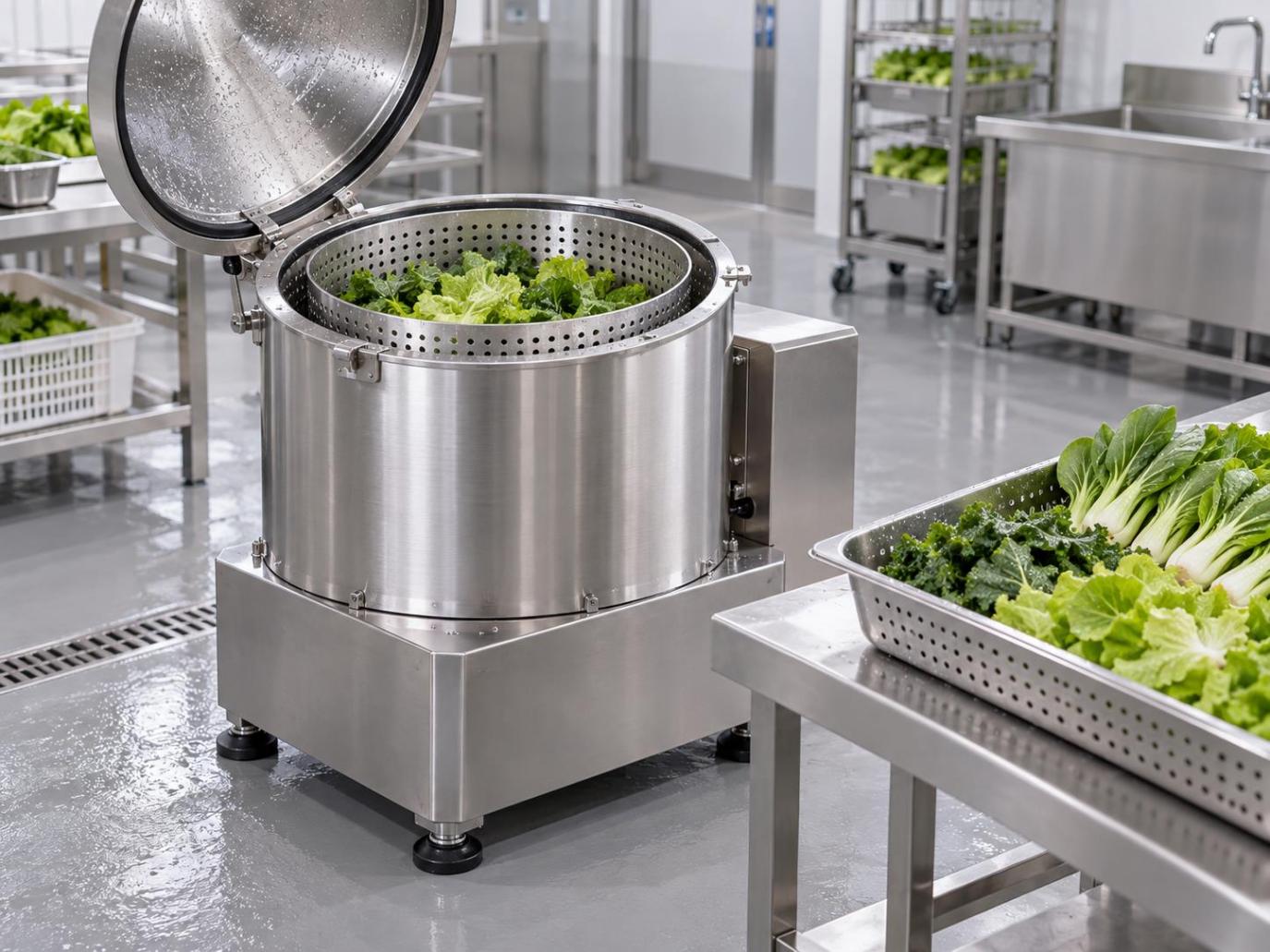
Remove surface water after washing without applying heat or drying the food internally. AGICO's compact fruit and vegetable dewatering machine uses a rotating perforated basket to spin free water away from leafy greens, cut vegetables and selected fruit. With a preliminary 10-20 kg batch capacity, it helps central kitchens and small food factories prepare cleaner, less dripping material for packing, freezing, cooking or further processing.
What This Food Dewatering Machine Does
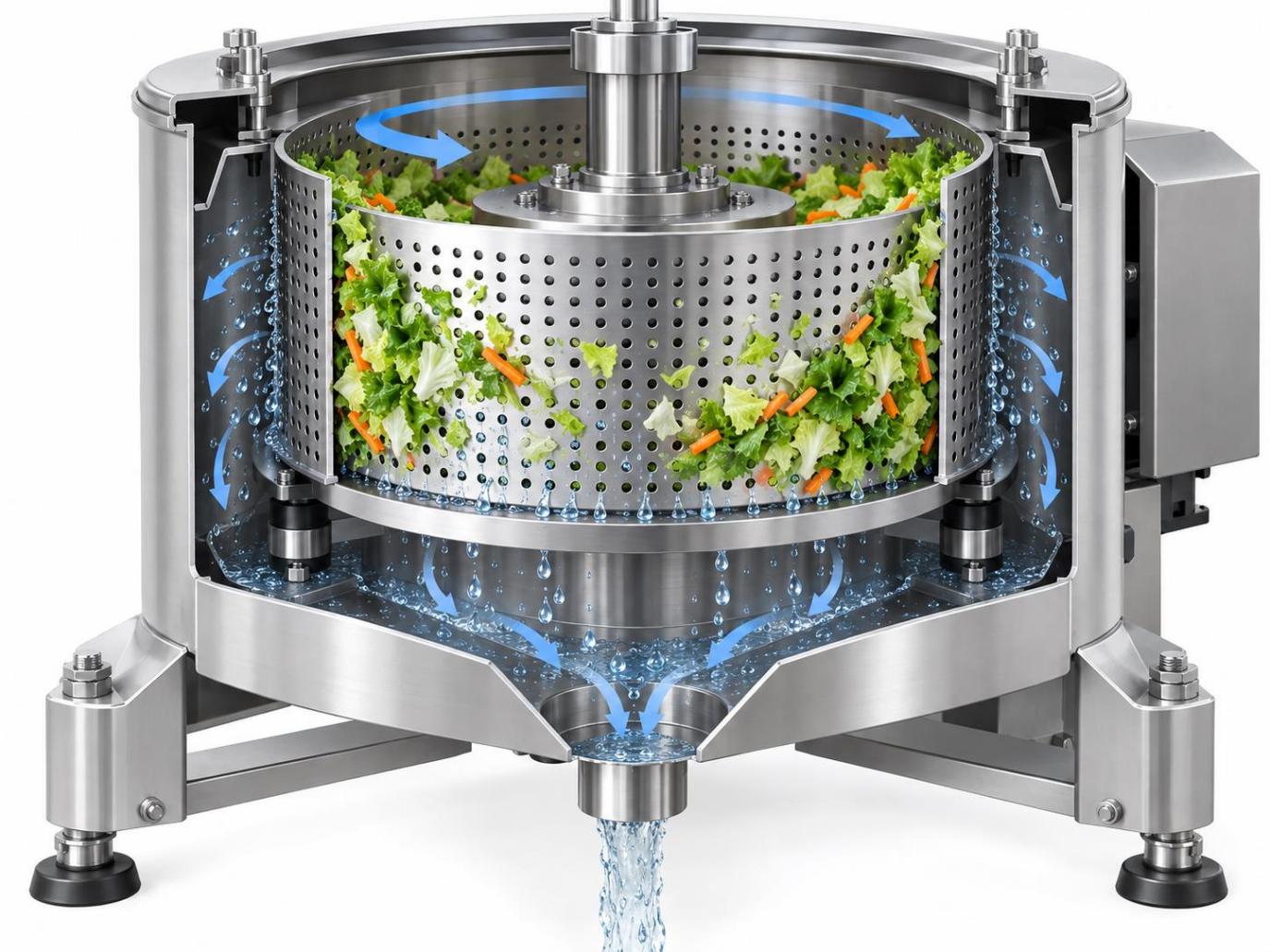
This machine is designed to remove free water that remains on a product's surface after washing, sanitizing, blanching or rinsing. It does not use hot air to reduce the natural moisture inside the food, so it should not be positioned as a food dehydrator or drying oven. The short centrifugal cycle is intended to leave fresh produce crisp and ready for the next operation rather than turn it into a shelf-stable dried product.
The same centrifugal principle can be used by some machines to remove surface oil from fried foods, but this page and configuration are dedicated to fruit and vegetable dewatering. Oil service can require different baskets, collection arrangements, cleaning procedures and process controls. Buyers seeking fried-food oil removal should specify a centrifugal deoiling machine separately rather than assuming the two duties are interchangeable.
Why Processors Add Centrifugal Dewatering
Faster surface-water removal: Centrifugal force removes retained wash water more quickly and consistently than passive draining in trays.
Gentler than thermal drying: A short, correctly selected spin cycle removes external water without intentionally heating or dehydrating the produce.
Better preparation for packing: Less free water in a tray or bag can support cleaner presentation and more controlled downstream packaging.
Compact batch operation: The 400 and 600 mm basket options suit processors that need flexible small-batch work rather than a long continuous line.
Simple cycle control: A timer lets operators standardize dewatering time for different products after trials.
Hygienic equipment concept: Stainless-steel construction and a removable product basket support routine food-plant cleaning and inspection.
How Centrifugal Vegetable Dewatering Works
Washed produce is loaded evenly into the perforated inner basket. After the lid and safety system are secured, the motor rotates the basket. Centrifugal force moves surface water outward through the basket holes into the surrounding housing, where it flows to the drain. At the end of the timed cycle, the basket slows and the operator removes the product for inspection or transfer.
Good results depend on balanced loading. Large clumps on one side can create vibration and stress the drive system. Fragile leaves, soft berries and irregular cut pieces also respond differently to speed and time. Start with a short trial cycle, inspect bruising and residual water, and only then establish the standard operating recipe. Never open the lid or reach into the basket until rotation has stopped and energy has been isolated according to the manual.
Reference Technical Parameters
The following figures are taken from the supplied GELGOOG fruit and vegetable processing catalogue and are preliminary selection references. Confirm the exact basket, voltage, speed, controls, drain connection, materials and overall dimensions in the final written quotation.
|
Reference Model |
Basket Diameter |
Capacity |
Motor Power |
Machine Dimensions |
Operation |
|
CD-400 |
400 mm |
10-20 kg/batch |
1.1 kW |
1000 x 500 x 700 mm |
Timed batch |
|
CD-600 |
600 mm |
10-20 kg/batch |
1.5 kW |
1200 x 700 x 750 mm |
Timed batch |
Note: CD-400 and CD-600 are working labels for comparison in this draft. Capacity is a catalogue batch reference, not a guaranteed throughput. Final output depends on loading weight, product density, cycle time, drain time and handling between batches.
How to Select the Right Basket Size
The 400 mm configuration is a practical starting point for test kitchens, restaurants, salad producers and small workshops that change products frequently. Its smaller basket can be easier to load with modest batches. The 600 mm configuration provides more working space and a higher reference motor power, making it worth evaluating for bulkier leafy vegetables or plants that want fewer loading cycles. Because both catalogue entries state 10-20 kg per batch, do not infer higher throughput from diameter alone; request a cycle study using your product.
Calculate required hourly output from the full cycle: loading, lid closing, acceleration, spinning, braking, unloading and basket cleaning. A machine holding 20 kg does not automatically produce 20 kg every few minutes. AGICO should compare the target kg/h with realistic labor and handling conditions before recommending a model.
Protecting Product Quality
The objective is a clean surface with less free water, not a crushed or wilted product. Leafy vegetables generally need gentler settings than dense carrot pieces or potato strips. A removable liner or suitable perforation pattern may help prevent small pieces from escaping. Product testing should document input weight, output weight, cycle time, visible bruising, breakage and residual surface moisture. These results are more useful than a general claim such as 'high dehydration rate.'
Applications
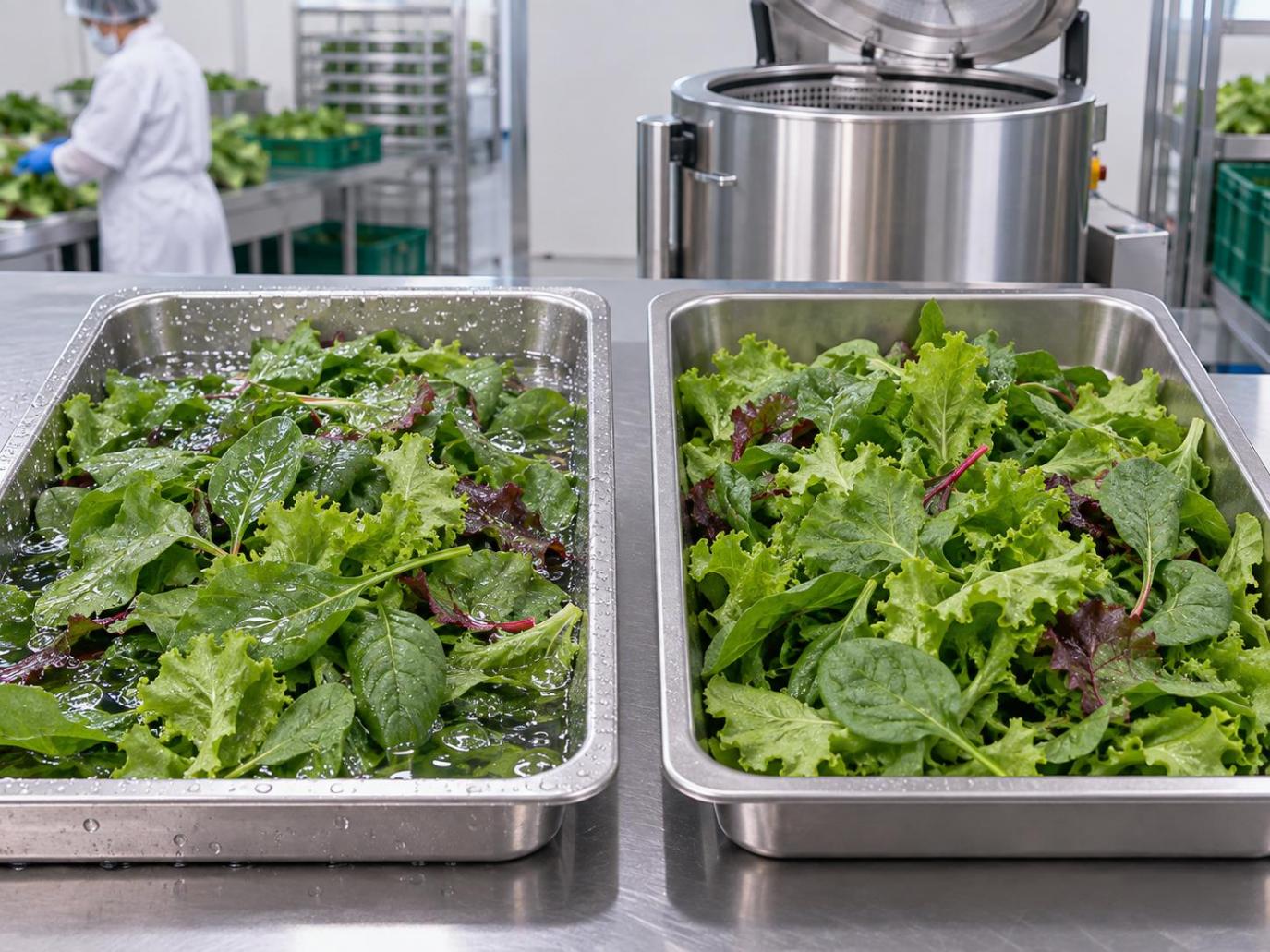
Fresh-cut leafy vegetables
Lettuce, spinach, cabbage and mixed salad leaves after washing and sanitizing, subject to gentle cycle testing.
Cut root vegetables
Carrot pieces, potato strips, radish and similar firm products before packing, blanching, freezing or cooking.
Central kitchens
Prepared vegetables for restaurants, catering businesses, canteens and meal-production facilities.
Selected fruits
Firm cut or whole fruit that can tolerate basket handling; delicate fruit requires a sample trial.
Pre-freezing preparation
Surface-water control before freezing can reduce unnecessary carryover water, while final freezing performance depends on the complete process.
Where It Fits in a Processing Line
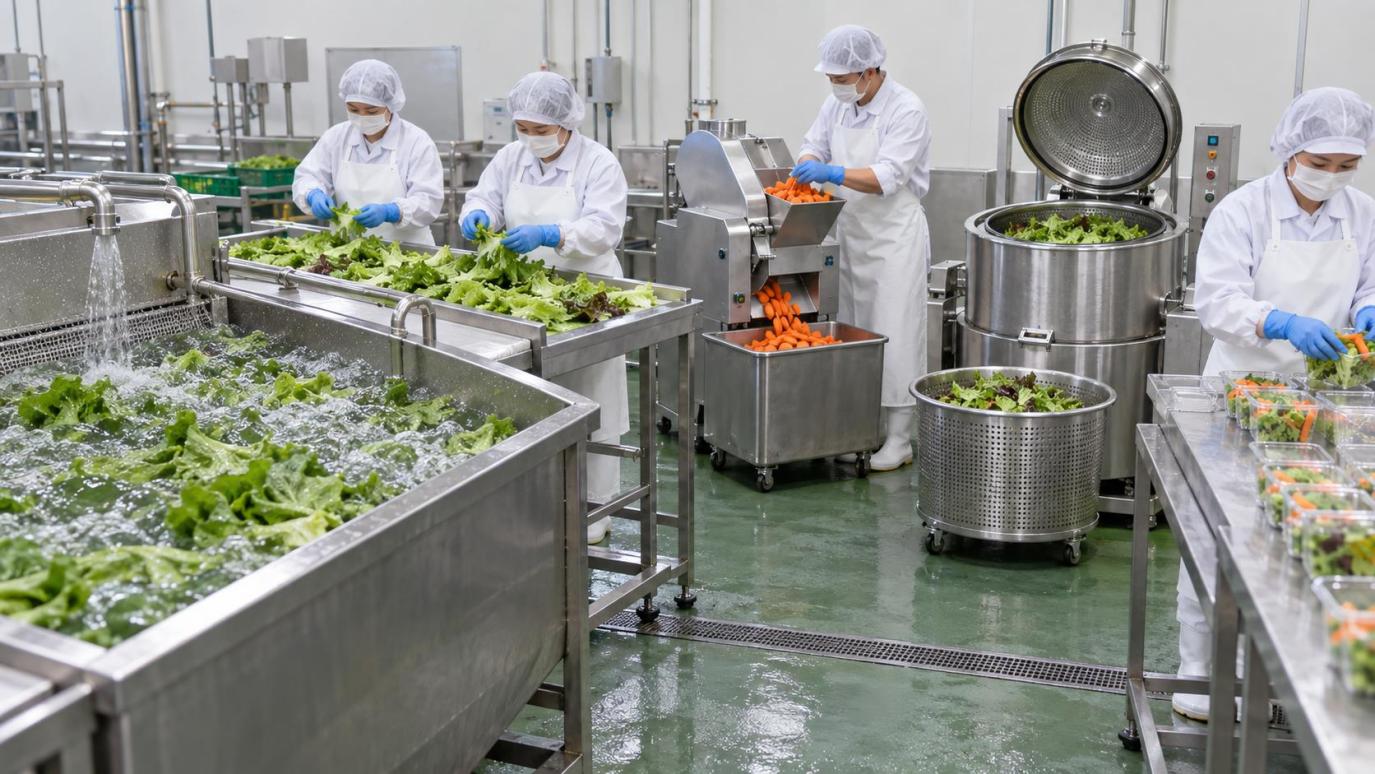
A common fresh-cut flow is sorting, trimming, fruit and vegetable washing, cutting, secondary rinsing, centrifugal dewatering, inspection and packing. If size reduction is required, connect an appropriate commercial vegetable cutting machine upstream and balance its output with the batch dewatering cycle.
A stand-alone unit works well when operators move baskets or trays manually. Higher output may justify multiple baskets, a lifting device, conveyors or a continuous vibration/air draining system. Centrifugal dewatering is usually more thorough for a batch, while vibration and air systems support continuous, gentler conveying. The best choice depends on product sensitivity, factory space, labor and required residual water.
AGICO Engineering and Lifecycle Support
AGICO supplies fruit, beverage and food-processing equipment for individual workstations and coordinated lines. Our team can review product samples, batch weight, wash process, factory utilities and downstream packaging before preparing a technical proposal. The aim is to select a machine that fits the process instead of simply offering the largest basket.
Project support may include equipment selection, layout coordination, operating guidance, spare-parts planning and installation communication according to the final contract. Routine attention should cover the basket, drain, lid interlock, bearings, drive, vibration mounts and electrical controls. Recording cycle settings by product helps operators reproduce results and identify maintenance needs early.
Hygiene, Safety and Responsible Operation
Confirm food-contact materials, surface finish, guards, lid interlock, braking method and electrical protection for the destination market. Clean and sanitize product-contact parts under the plant's hygiene plan, and prevent stagnant water around the drain. Isolate electrical energy before maintenance and never bypass a safety device. Removing surface water mechanically can avoid heat input at this stage, while correct sizing reduces needless power use and product waste.
Certification and regulatory requirements vary by country and configuration. Any CE, food-contact, electrical or other documentation must be listed in the quotation and verified for the exact supplied machine. Website descriptions and preliminary catalogue data are not substitutes for project-specific documents.
❓ Frequently Asked Questions
Q:Is a vegetable dewatering machine the same as a food dehydrator?▼
A:No. This centrifugal machine removes free surface water in a short batch cycle. A food dehydrator uses heat or controlled air to reduce internal moisture over a much longer period.
Q:Is it the same as a centrifugal deoiling machine?▼
A:The principle can be similar, but this page is for washed fruit and vegetables. Fried-food deoiling can require different process settings, collection and sanitation, so request it as a separate application.
Q:How much can the machine process per batch?▼
A:The supplied catalogue gives a preliminary 10-20 kg per batch for both 400 and 600 mm basket references. Actual loading depends on product volume, density and allowable damage.
Q:Can it dewater leafy vegetables without damage?▼
A:It can be suitable when load balance, basket design, speed and time are matched to the leaf. A sample test is recommended for tender products.
Q:What information is needed for a quotation?▼
A:Send the product, cut size, batch and hourly target, wash method, required residual water, voltage, factory space and whether conveyors or other line machines are needed.
Q:Can the machine connect to a packing line?▼
A:Yes. A batch unit can discharge to inspection and packing by trays, carts or a planned transfer system. Confirm line timing so packing does not wait for irregular batches.
Request a Product-Based Dewatering Test
The best model is the one that removes enough surface water without sacrificing saleable yield. Send AGICO photos or samples, average batch weight, target kg/h and your next processing step. We can then discuss basket size, cycle control, electrical specification and line interfaces. Contact AGICO for a tailored vegetable dewatering machine proposal and include your destination country and factory voltage.
Get in Touch Now!