Build your peanut butter business around a texture customers want to buy again. An AGICO commercial peanut butter machine uses a colloid grinding head to turn prepared peanuts into a fine paste for retail jars, bakery fillings and food-service packs. Compact configurations let small processors start with a dedicated grinder and add roasting, mixing and filling equipment as demand grows.
Tell us whether you buy ready-roasted kernels or process raw shelled peanuts, how much finished butter you need per shift, and the texture you want. Those details determine the mill configuration and the equipment around it. The peanut butter grinding machine performs the fine grinding stage; roasting and packing are separate operations that can be included in the proposal.
A Commercial Peanut Butter Maker Matched to Your Recipe
A spread made from roasted peanuts alone behaves differently from one containing sugar, salt, oil or stabilizer. Kernel variety, roast condition and feed temperature also change the way paste flows through the mill. Selecting the machine against your actual formulation gives a more useful starting point than comparing motor power alone.
01
Controlled texture: An adjustable grinding clearance supports trials for the required smoothness. Record settings and sample results so the operator can repeat an approved process.
02
Compact production: Smaller mill configurations suit workshops where operators feed prepared kernels and collect paste in food-grade vessels.
03
A route to greater output: Grinding can be combined with preparation and packing modules as order volume increases.
04
Access for routine care: Review how the selected head opens for inspection and cleaning, along with seals and grinding surfaces that need periodic attention.
05
Flexible finished products: Use the ground base for plain spreads or formulated products, with separate mixing and trials for added ingredients.
How the Peanut Butter Grinder Works
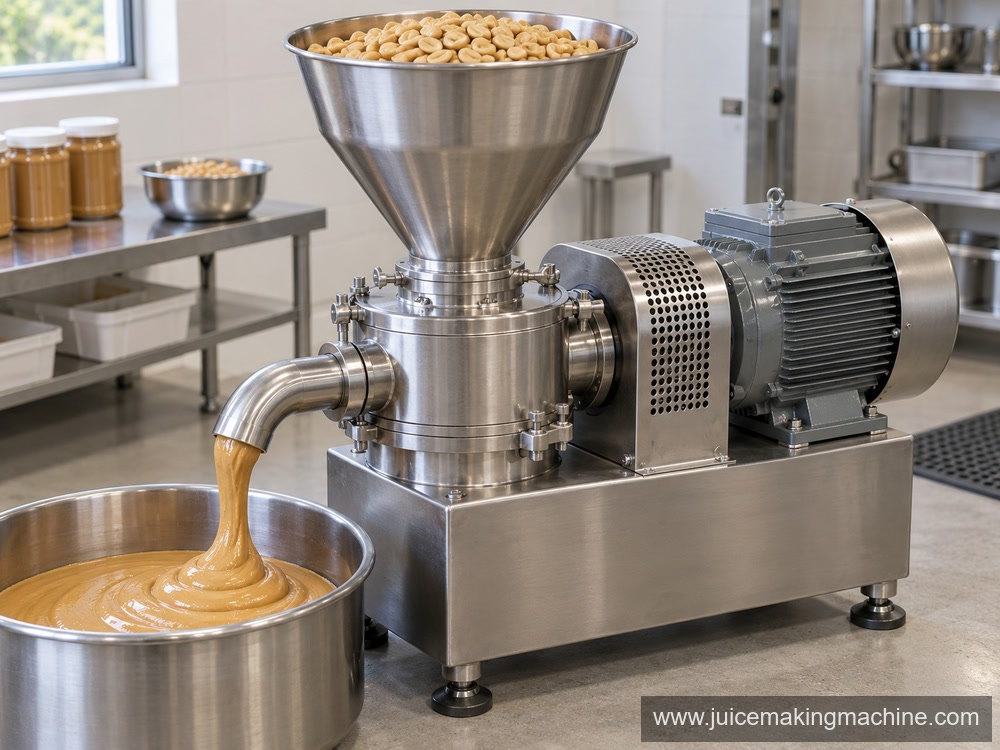
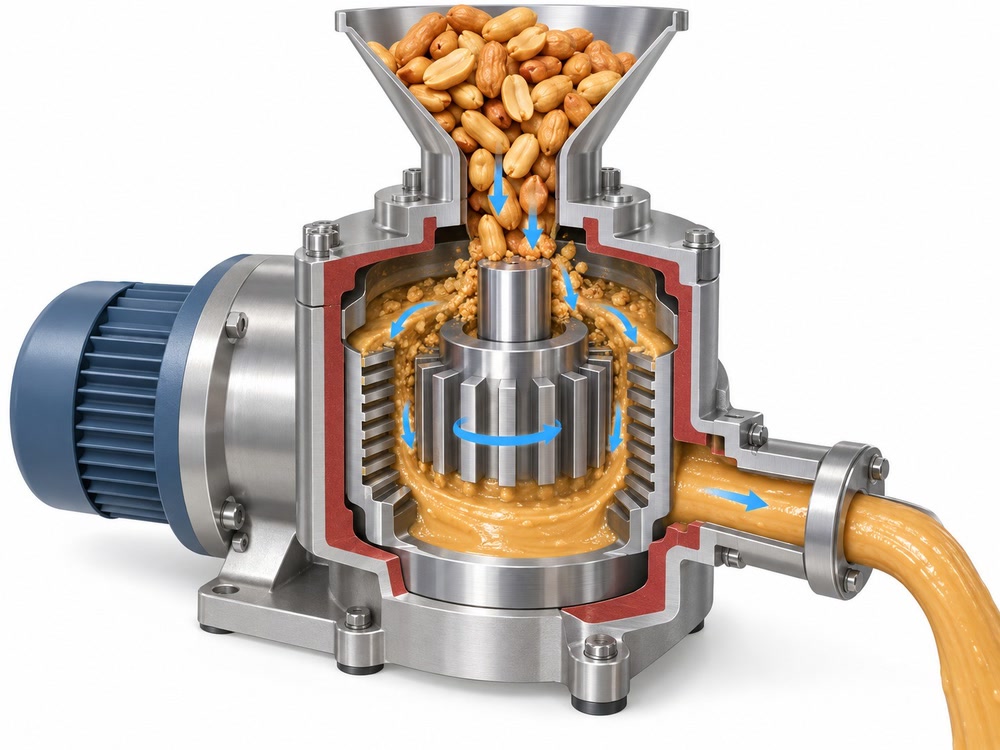
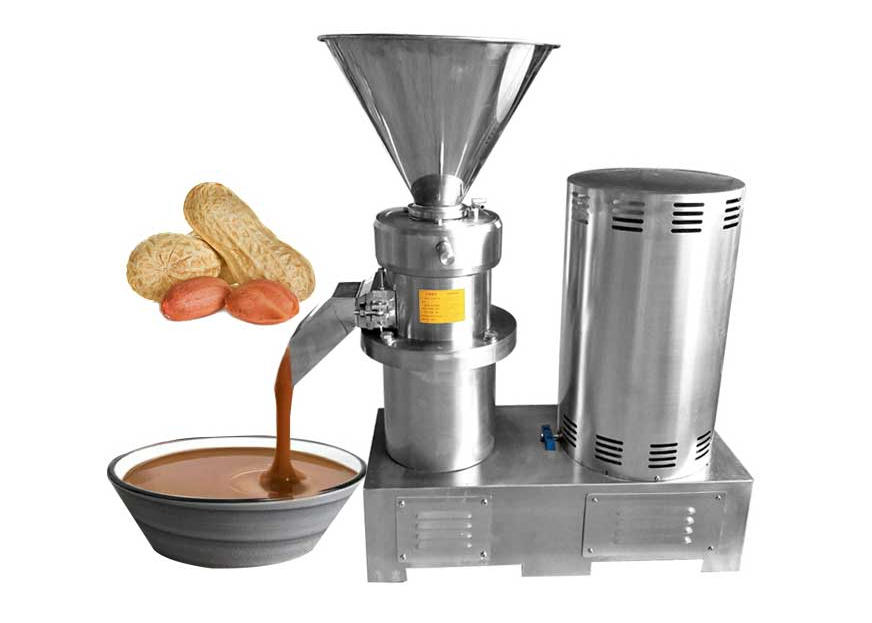
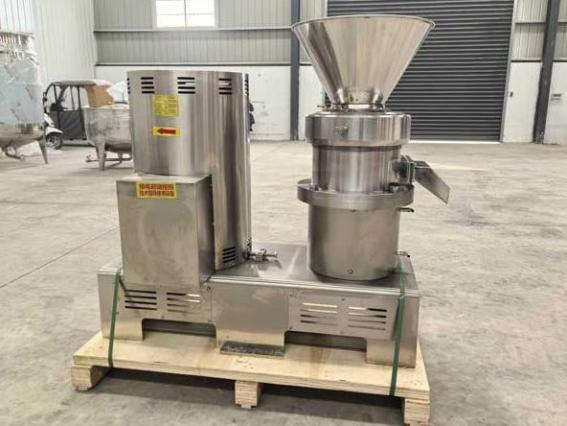
The core grinding stage uses a colloid mill. Prepared kernels enter the feed opening and pass through the working space between a rotating rotor and a stationary stator. Mechanical shear and friction reduce the particles and distribute them in the oil naturally present in the peanuts. The paste then leaves through the outlet for collection or further processing.
Clearance, feed rate and repeat passes affect the result. A tighter setting can increase resistance and temperature as well as improve refinement. Establish the permitted adjustment procedure with the machine supplier, and inspect samples at the intended serving temperature. Warm paste often looks more fluid than the same product after cooling.
Reference Models for Initial Selection
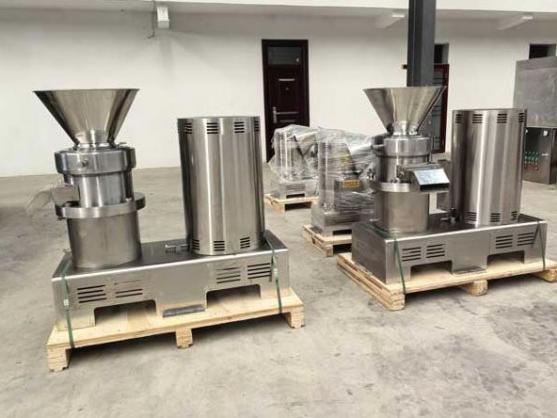
These three configurations follow the AGJM series listed on our colloid mill page. Capacity is a reference range for model selection, rather than a guaranteed finished peanut butter output. The quotation should specify a suitable nut-grinding head, feed arrangement, electrical supply and the agreed product test.
Model
Capacity kg/h
Power kW
Weight kg
Dimensions mm
AGJM-80
60-80
4
150
600 x 410 x 930
AGJM-110
100-200
7.5
175
700 x 430 x 1000
AGJM-130
300-500
11
285
990 x 440 x 1000
The reference electrical supply is 380 V; confirm phase and frequency before ordering. Real output depends on peanut condition, recipe, target texture, feeding continuity and the number of passes. Do not add the capacity of repeated passes together and count that as saleable output.
Start with the quantity you intend to pack each day and the hours actually available for grinding. For example, a target of 400 kg during four productive grinding hours requires 100 kg/h of finished paste. That calculation excludes setup, cleaning and waiting for roasted peanuts. If a second pass is needed, the machine must still deliver the agreed final texture at the required net rate.
A smaller mill may be the better fit for frequent recipe changes and short production runs. A larger mill becomes useful when roasting, cooling and filling can keep pace. Ask for a trial with representative peanuts before committing to a capacity, particularly for thick recipes or a very fine finish. Include the expected paste temperature and collection method in the acceptance criteria.
Make Smooth Peanut Butter with Grinder
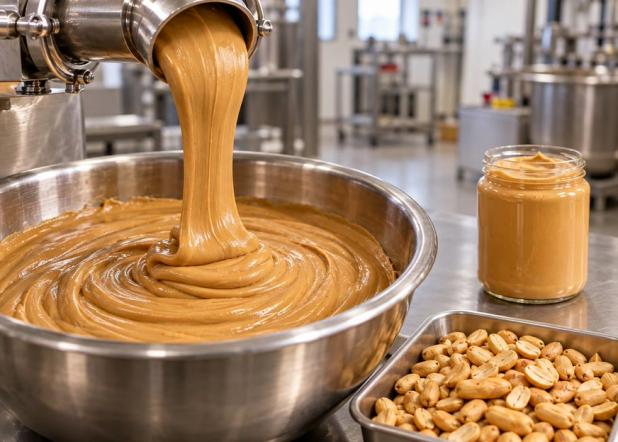
For smooth butter, compare samples for mouthfeel and visible grit after they have cooled. Keep the incoming peanut condition consistent so the operator is not compensating for a different roast every batch. Grinding generates heat; record discharge temperature and discuss staged grinding or suitable cooling arrangements if the recipe requires them.
For crunchy butter, prepare a smooth base and blend in separately sized peanut pieces downstream. Putting the intended crunchy inclusions through the fine grinding stage will reduce them. The mixer and filler must also pass those pieces without damaging them or blocking the outlet. Natural oil separation depends on formulation and storage conditions; a grinder alone cannot guarantee a separation-free product.
Applications for Small Food Producers
Retail Peanut Butter Jars
Produce plain or formulated spreads for local shops and private labels. Define jar size, texture, ingredient list and the intended daily packing volume before matching the grinder and filler.
Bakeries and Food Service
Prepare peanut paste for fillings, biscuits, sauces or dessert kitchens. A paste intended for pumping or mixing may need a different consistency from a spread sold directly in a jar.
Other Nut and Seed Pastes
Almond, cashew and sesame applications require separate material trials. Their oil content and grinding behavior differ, and the same hourly output should not be assumed. Plan ingredient changeovers and cleaning when sharing equipment.
From Roasted Peanuts to Filled Jars
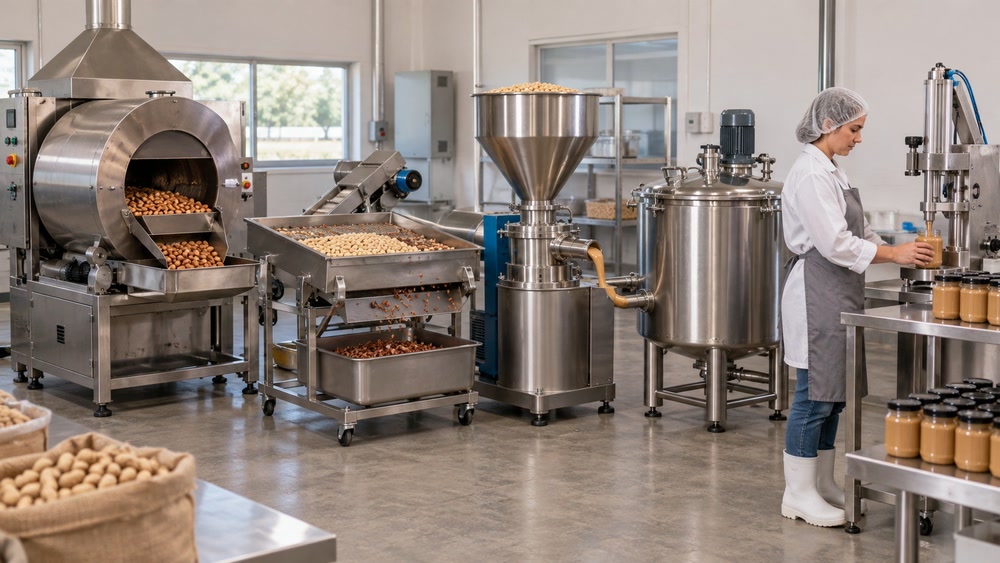
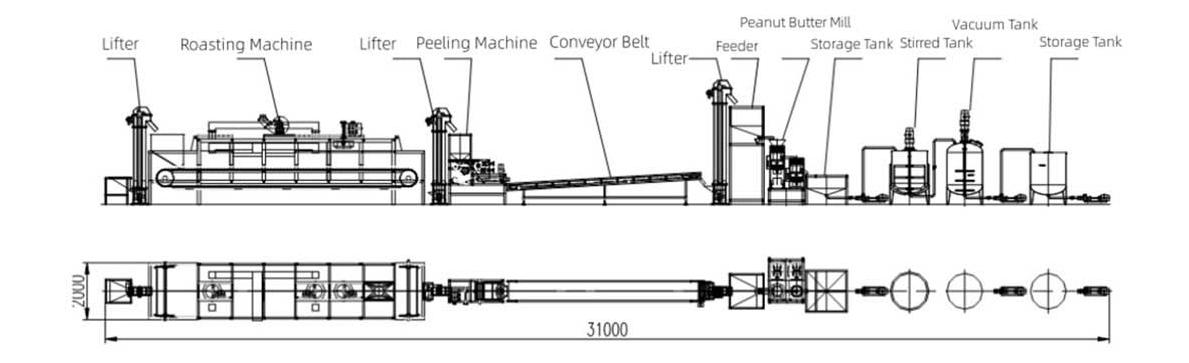
A small process normally starts with kernel inspection and roasting, followed by controlled cooling, skin removal where required, and another inspection before grinding. After fine grinding, a mixing vessel can incorporate the recipe ingredients. Product conditioning, transfer and jar filling follow according to the formulation and packaging process. Buyers using approved ready-roasted kernels may begin at the grinding stage.
For a raw-peanut project, ask AGICO to match the roaster and cooling equipment to your grinding schedule. A batch roaster delivers product intermittently, so holding and feeding arrangements matter as much as its nominal capacity. Specify the roast color and flavor needed, and confirm the process with your product team.
Select filling equipment against actual paste viscosity, filling temperature, jar opening and any crunchy inclusions. A suitable piston or other positive-displacement filler can be evaluated using a representative sample. Test fill weight, nozzle cutoff, drips and jar cleanliness across the intended pack sizes. The transfer pump and hose also need to handle the paste without excessive pressure or temperature rise.
Small workshop with roasting grinding mixing and peanut butter jar filling
Automatic peanut butter production line
Standalone Grinder or Compact Processing Line
A standalone mill is a practical choice when you already have a reliable source of prepared kernels and can manage ingredient mixing and packing. It concentrates spending on the grinding stage. A compact line adds control over roasting and downstream handling, but it also requires more space, utilities, cleaning and coordination. Ask for a quotation that separates the mill, preparation equipment, mixer, transfer system and filler so the scope is easy to compare.
AGICO supplies individual machines and coordinated food processing equipment. Share your existing equipment and available floor space so the proposed additions fit the way your workshop operates. Installation guidance, commissioning support and spare-parts scope should be stated in the final offer.
Cleaning Maintenance and Product Control
Peanut paste can remain around seals and inside narrow passages. Review disassembly access, approved cleaning procedures and drying before the next run. When equipment is shared with other products, agree on an allergen changeover procedure. Inspect grinding surfaces and seals regularly, and keep replacement parts for items that would otherwise stop production.
Grinding is not a validated microbial reduction step. Use approved ingredients and a verified food-production process appropriate to the product. Keep guards fitted and isolate power before opening the mill. Confirm food-contact materials and destination-specific electrical requirements in the order, rather than assuming every configuration has identical documentation.
For operating costs, measure energy per kilogram of acceptable finished paste, product left in the machine and time spent cleaning. Avoiding unnecessary repeat passes and matching production runs to demand can reduce both energy use and material loss. The cheapest machine to purchase may cost more to operate if it cannot meet the texture target at a workable rate.
Frequently Asked Questions
Q: Can the machine make peanut butter without added oil
A: It may be suitable for a peanut-only recipe using the oil naturally present in the kernels. Confirm feeding and texture with a trial using your peanuts. Added oil is a formulation choice, not a universal machine requirement.
Q: Does the grinder also roast peanuts
A: No. Roasting is a separate preparation stage. You can supply ready-roasted kernels or request a proposal covering roasting, cooling and preparation as well as grinding.
Q: How fine will the finished paste be
A: The result depends on the raw material, working clearance and passes. Provide a reference sample and agree on a test method. A general mesh claim should not replace a finished-product texture specification.
Q: Which model suits a small workshop
A: Compare your net output target with the AGJM-80 and AGJM-110 reference ranges first. Leave time for feeding, collection and cleaning, and verify output at the required texture before ordering.
Q: Can a commercial peanut butter maker produce crunchy butter
A: Use the mill for the smooth base and mix controlled peanut pieces into that base afterward. Confirm the mixer, transfer equipment and filler can accommodate the chosen particle size.
Q: What determines the quotation
A: The mill size, grinding head, motor supply, food-contact specification, cooling or transfer options and the included preparation and filling machines all affect scope. Share these details for a comparable written offer.
Request a Peanut Butter Machine Configuration
Send your peanut condition, recipe, target kilograms per hour, desired smooth or crunchy texture, jar size and factory voltage. A photo or sample of the finished butter you want is especially useful. Tell us which roasting and packing equipment you already own so the proposal covers the parts your business needs.
Contact AGICO for a peanut butter machine quotation with a clear equipment list and a proposed sample-test scope.